


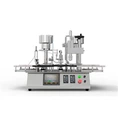
As a seasoned supplier of ampoule sealers, I've witnessed firsthand the critical role these machines play in various industries, from pharmaceuticals to cosmetics. The sealing mechanism of an ampoule sealer is a fascinating blend of science and engineering, ensuring the integrity and sterility of the contents within. In this blog post, I'll delve into the intricacies of the sealing process, shedding light on how these machines work and why they're essential for product quality and safety.
The Basics of Ampoule Sealing
Before we dive into the sealing mechanism, let's briefly understand what an ampoule is. An ampoule is a small, hermetically sealed glass or plastic container used to store a single dose of liquid medication, vaccine, or other sensitive substances. The primary purpose of sealing an ampoule is to protect its contents from contamination, oxidation, and evaporation, ensuring the product remains stable and effective throughout its shelf life.
Types of Ampoule Sealers
There are two main types of ampoule sealers: flame sealers and induction sealers. Each type uses a different method to create a secure seal, but they both aim to achieve the same goal of protecting the ampoule's contents.
Flame Sealers
Flame sealers are the traditional method of sealing ampoules and are still widely used in the pharmaceutical industry. These machines use a high-temperature flame to heat the neck of the ampoule, causing the glass to soften and melt. As the glass melts, it fuses together, creating a hermetic seal.
The process of flame sealing involves several steps:
- Ampoule Loading: The ampoules are loaded onto a conveyor belt or carousel, which transports them through the sealing machine.
- Flame Application: A gas burner or torch is used to apply a high-temperature flame to the neck of the ampoule. The flame is carefully controlled to ensure the glass reaches the correct temperature without overheating or cracking.
- Sealing: As the glass softens and melts, the neck of the ampoule is pinched or twisted to form a seal. This can be done manually or using a mechanical device.
- Cooling: After the seal is formed, the ampoule is cooled rapidly to harden the glass and prevent it from cracking.
Flame sealers offer several advantages, including their simplicity, reliability, and ability to create a strong, hermetic seal. However, they also have some limitations, such as the risk of glass particles falling into the ampoule during the sealing process and the need for skilled operators to control the flame.
Induction Sealers
Induction sealers are a more modern method of sealing ampoules and are becoming increasingly popular in the pharmaceutical and cosmetic industries. These machines use electromagnetic induction to heat a metallic foil liner, which is placed inside the ampoule cap. As the foil heats up, it melts and bonds to the rim of the ampoule, creating a hermetic seal.
The process of induction sealing involves several steps:
- Ampoule Loading: The ampoules are loaded onto a conveyor belt or carousel, which transports them through the sealing machine.
- Foil Placement: A metallic foil liner is placed inside the ampoule cap. The foil is typically made of aluminum or a combination of aluminum and other metals.
- Induction Heating: An induction coil is used to generate an electromagnetic field, which heats the metallic foil liner. The heat causes the foil to melt and bond to the rim of the ampoule.
- Cooling: After the seal is formed, the ampoule is cooled rapidly to harden the foil and prevent it from peeling or separating.
Induction sealers offer several advantages, including their speed, efficiency, and ability to create a clean, hermetic seal without the risk of glass particles falling into the ampoule. They also require less operator skill than flame sealers and can be easily integrated into automated production lines. However, they also have some limitations, such as the higher cost of the equipment and the need for compatible ampoule caps.
Factors Affecting the Sealing Process
Several factors can affect the sealing process of an ampoule sealer, including the type of ampoule, the type of sealer, the sealing temperature, the sealing time, and the pressure applied during the sealing process.
Type of Ampoule
The type of ampoule used can have a significant impact on the sealing process. Glass ampoules are the most common type of ampoule used in the pharmaceutical industry because they are transparent, inert, and can be easily sterilized. However, glass ampoules are also fragile and can crack or break during the sealing process. Plastic ampoules are a more recent development and offer several advantages, such as their flexibility, durability, and ability to be molded into different shapes. However, plastic ampoules are also more prone to chemical reactions and can be difficult to seal hermetically.
Type of Sealer
The type of sealer used can also affect the sealing process. Flame sealers are best suited for glass ampoules, while induction sealers are best suited for plastic ampoules. However, both types of sealers can be used with a variety of ampoule materials, depending on the specific requirements of the application.
Sealing Temperature
The sealing temperature is a critical factor in the sealing process. If the temperature is too low, the glass or foil may not melt properly, resulting in a weak or incomplete seal. If the temperature is too high, the glass or foil may overheat and crack, resulting in a defective seal. The optimal sealing temperature depends on the type of ampoule, the type of sealer, and the specific requirements of the application.
Sealing Time
The sealing time is another critical factor in the sealing process. If the sealing time is too short, the glass or foil may not have enough time to melt and bond properly, resulting in a weak or incomplete seal. If the sealing time is too long, the glass or foil may overheat and crack, resulting in a defective seal. The optimal sealing time depends on the type of ampoule, the type of sealer, and the specific requirements of the application.
Pressure Applied
The pressure applied during the sealing process can also affect the quality of the seal. If the pressure is too low, the glass or foil may not bond properly, resulting in a weak or incomplete seal. If the pressure is too high, the glass or foil may crack or break, resulting in a defective seal. The optimal pressure depends on the type of ampoule, the type of sealer, and the specific requirements of the application.


Quality Control and Testing
To ensure the quality and integrity of the sealed ampoules, it's essential to implement a rigorous quality control and testing program. This program should include visual inspection, leak testing, and sterility testing.
Visual Inspection
Visual inspection is the most basic form of quality control and involves examining the sealed ampoules for any visible defects, such as cracks, chips, or uneven seals. Visual inspection can be done manually or using automated inspection equipment.
Leak Testing
Leak testing is a more advanced form of quality control and involves checking the sealed ampoules for any leaks. There are several methods of leak testing, including the bubble test, the dye penetration test, and the pressure decay test. Leak testing can be done manually or using automated testing equipment.
Sterility Testing
Sterility testing is the most critical form of quality control and involves checking the sealed ampoules for any microbial contamination. Sterility testing is typically done using a culture method, which involves incubating the ampoules in a nutrient medium and checking for the growth of microorganisms. Sterility testing can be done manually or using automated testing equipment.
Conclusion
The sealing mechanism of an ampoule sealer is a complex and critical process that plays a vital role in protecting the integrity and sterility of the contents within. Whether you choose a flame sealer or an induction sealer, it's essential to understand the factors that affect the sealing process and implement a rigorous quality control and testing program to ensure the quality and safety of your products.
As a supplier of Ampoule Sealer, we offer a wide range of high-quality ampoule sealers that are designed to meet the specific needs of your industry. Our machines are built to last and are backed by our commitment to providing excellent customer service and support.
If you're interested in learning more about our ampoule sealers or have any questions about the sealing process, please don't hesitate to contact us. We'd be happy to discuss your requirements and help you find the right solution for your business.
References
- "Ampoule Filling and Sealing Machines: Principles and Applications." Pharmaceutical Engineering, Vol. 32, No. 3, May-June 2012.
- "Induction Sealing Technology: A Review." Packaging Technology and Science, Vol. 25, No. 4, July-August 2012.
- "Quality Control of Ampoule Sealing: A Review." Journal of Pharmaceutical Sciences and Research, Vol. 6, No. 10, October 2014.