


As a supplier of China pulverizers, I've encountered numerous inquiries regarding the moisture content requirements for materials processed in our machines. Understanding these requirements is crucial for ensuring efficient and effective pulverization, as well as maintaining the quality of the final product. In this blog post, I'll delve into the significance of moisture content, the ideal levels for different materials, and how it impacts the performance of our pulverizers.
The Importance of Moisture Content in Pulverization
Moisture content plays a pivotal role in the pulverization process. Excessive moisture can lead to several issues, including clogging of the pulverizer, reduced efficiency, and poor particle size distribution. Wet materials tend to stick together, forming agglomerates that are difficult to break down. This not only slows down the pulverization process but also increases the wear and tear on the machine components.
On the other hand, materials that are too dry can also pose problems. They may generate excessive dust during pulverization, which can be a health hazard for operators and may also cause environmental pollution. Additionally, dry materials may be more brittle and prone to over - pulverization, resulting in a product with an undesirably fine particle size.
Ideal Moisture Content for Different Materials
The ideal moisture content for materials in a pulverizer varies depending on the type of material being processed. Here are some general guidelines for common materials:
Minerals and Ores
Minerals and ores typically require a relatively low moisture content, usually in the range of 0 - 5%. High moisture levels can cause the minerals to stick to the grinding surfaces, reducing the efficiency of the pulverizer. For example, in the processing of iron ore, a moisture content above 5% can lead to significant clogging issues, especially in the crushing and grinding chambers.

Agricultural Products
Agricultural products such as grains and seeds have different moisture requirements. For grains like wheat and corn, a moisture content of around 12 - 14% is often ideal for pulverization. This level of moisture ensures that the grains are not too brittle, which could lead to excessive dust generation, and not too wet, which would cause clogging. When processing soybeans, a slightly lower moisture content of 10 - 12% is preferred to achieve a consistent particle size.
Chemicals and Pharmaceuticals
In the chemical and pharmaceutical industries, the moisture content requirements are highly specific to the product. Some chemicals may require a moisture content below 1% to prevent chemical reactions or degradation during pulverization. For pharmaceutical powders, strict moisture control is essential to ensure the stability and efficacy of the final product. A moisture content of 2 - 5% is often targeted for many pharmaceutical materials.
Impact of Moisture Content on Pulverizer Performance
The moisture content of the materials directly affects the performance of the pulverizer. When the moisture content is within the optimal range, the pulverizer operates smoothly, with a high throughput and a consistent particle size distribution. The grinding elements, such as the blades or hammers, can effectively break down the materials without being hindered by excessive sticking or clogging.
However, when the moisture content is too high, the pulverizer may experience reduced throughput. The wet materials may accumulate in the machine, causing blockages and increasing the power consumption. This can lead to increased maintenance costs and downtime for cleaning and repair.
Conversely, if the moisture content is too low, the pulverizer may generate excessive heat due to the friction between the dry materials and the grinding elements. This can not only damage the machine components but also affect the quality of the final product.
Controlling Moisture Content
To ensure that the materials fed into the pulverizer have the appropriate moisture content, several methods can be employed. Drying is a common method for reducing moisture content. For large - scale operations, industrial dryers such as rotary dryers or fluidized - bed dryers can be used. These dryers can effectively remove moisture from the materials to the desired level.
On the other hand, if the materials are too dry, a small amount of water can be added to increase the moisture content. However, this must be done carefully to avoid over - wetting the materials. Moisture sensors can be installed in the feed system to monitor the moisture content in real - time and adjust the drying or wetting process accordingly.
Our China Pulverizers and Moisture Content Adaptability
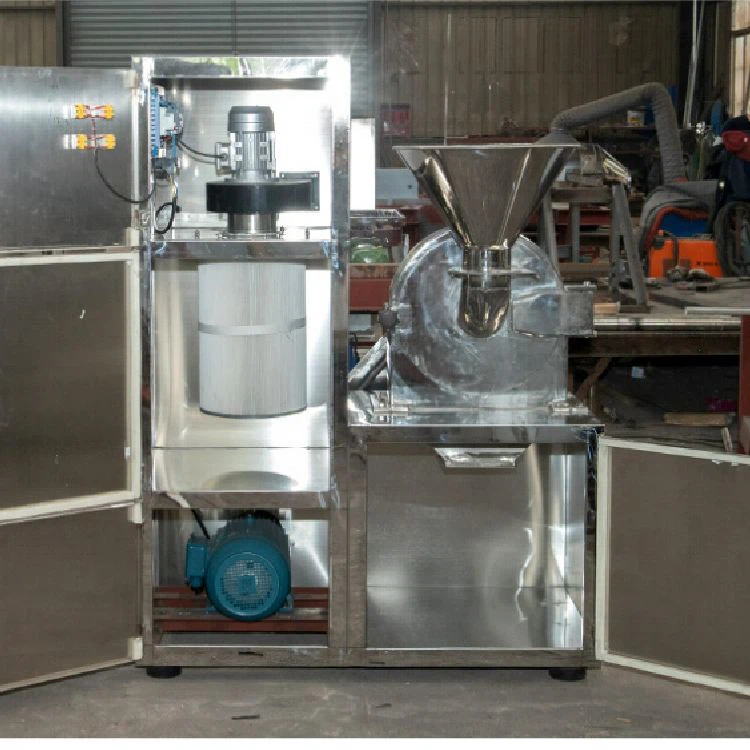
Our China pulverizers are designed to handle a wide range of moisture content levels. They are equipped with advanced features such as adjustable grinding gaps and high - speed rotating blades, which can effectively pulverize materials with different moisture contents. Our engineers have conducted extensive research and development to optimize the design of the pulverizers to ensure efficient operation even under challenging moisture conditions.
We also offer a range of auxiliary equipment to help our customers control the moisture content of the materials. For example, our Mixing Machine can be used to mix dry and wet materials to achieve the desired moisture level. Our Granulators can also be used in conjunction with the pulverizers to further process the materials and improve their flowability.
Conclusion
In conclusion, the moisture content of materials is a critical factor in the pulverization process. Understanding the ideal moisture content for different materials and how it affects the performance of the pulverizer is essential for achieving efficient and high - quality pulverization. As a China pulverizer supplier, we are committed to providing our customers with the best - in - class pulverizers and solutions for moisture content control.
If you are interested in our Pulverizer Machine or have any questions about the moisture content requirements for your specific materials, please feel free to contact us for a detailed consultation. We look forward to working with you to meet your pulverization needs.
References
- Perry, R. H., & Green, D. W. (1997). Perry's Chemical Engineers' Handbook. McGraw - Hill.
- Svarovsky, L. (1990). Solid - Liquid Separation. Butterworth - Heinemann.
- Mohsenin, N. N. (1980). Physical Properties of Plant and Animal Materials. Gordon and Breach Science Publishers.