


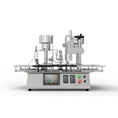
What is the filling stability of China vial filler over time?
As a supplier of China vial fillers, I have witnessed firsthand the remarkable evolution and performance of these machines in the pharmaceutical and related industries. Filling stability over time is a critical factor that determines the reliability and efficiency of vial filling operations. In this blog, I will delve into what filling stability means for China vial fillers, the factors that influence it, and how it impacts the overall production process.
Understanding Filling Stability
Filling stability refers to the ability of a vial filler to consistently dispense a precise volume of liquid or powder into vials over an extended period. This consistency is crucial for several reasons. Firstly, in the pharmaceutical industry, accurate dosing is a matter of patient safety. Incorrect filling volumes can lead to under - or over - medication, which can have serious consequences for patients. Secondly, from a production perspective, consistent filling ensures product quality and reduces waste. If a vial filler is not stable, there will be a higher rate of rejected vials, which increases costs and reduces productivity.
For China vial fillers, achieving high - level filling stability is a result of advanced design, high - quality manufacturing, and continuous technological innovation. These machines are engineered to meet the strictest industry standards, whether it's for small - scale laboratory production or large - scale industrial manufacturing.
Factors Affecting Filling Stability
- Mechanical Design and Construction
The mechanical design of a vial filler plays a fundamental role in its filling stability. China vial fillers are typically built with robust frames and precision - engineered components. For example, the pump system, which is responsible for transferring the liquid or powder into the vials, needs to be highly accurate. A well - designed pump will have minimal internal leakage and consistent flow characteristics. Additionally, the conveyor system that moves the vials through the filling process must be stable and reliable. Any vibrations or misalignments in the conveyor can cause inconsistent filling. - Material Compatibility
The materials used in the vial filler, especially those in contact with the product being filled, need to be compatible. For liquid filling, the wetted parts of the machine, such as the nozzles, tubing, and valves, must be made of materials that do not react with the liquid. Incompatible materials can lead to corrosion, clogging, or contamination, all of which can affect filling stability. China vial filler manufacturers pay close attention to material selection to ensure long - term compatibility and reliable performance. - Control Systems
Modern China vial fillers are equipped with advanced control systems. These systems use sensors and actuators to monitor and adjust the filling process in real - time. For example, level sensors can detect the liquid level in the reservoir and ensure that the filling pump is supplied with a consistent amount of liquid. Flow sensors can measure the flow rate of the product being filled and make adjustments to maintain the desired filling volume. The control software also allows for precise programming of filling parameters, such as filling time, pump speed, and nozzle height. - Maintenance and Calibration
Regular maintenance and calibration are essential for maintaining filling stability over time. China vial fillers are designed to be easy to maintain, with accessible components for cleaning and replacement. However, proper maintenance procedures need to be followed. For example, the nozzles should be cleaned regularly to prevent clogging, and the pump seals should be inspected and replaced as needed. Calibration is also crucial to ensure that the filling volume remains accurate. This involves using standard test vials to verify the filling accuracy and making adjustments to the machine settings if necessary.
The Impact of Filling Stability on Production
- Product Quality
High filling stability directly translates to high - quality products. When vials are filled with a consistent volume, the product inside each vial is uniform. This is especially important in the pharmaceutical industry, where product quality is closely regulated. Consistent filling also helps to maintain the integrity of the product's formulation, ensuring that the active ingredients are evenly distributed. - Cost - Efficiency
Filling stability reduces waste and improves productivity. When a vial filler is stable, there are fewer rejected vials due to incorrect filling volumes. This means less product is wasted, and the overall production yield is increased. Additionally, a stable vial filler requires less downtime for troubleshooting and adjustments, which further improves efficiency and reduces costs. - Compliance
In industries such as pharmaceuticals and cosmetics, compliance with regulatory standards is mandatory. A vial filler with good filling stability helps companies meet these standards. For example, in the pharmaceutical industry, the FDA and other regulatory bodies have strict requirements for dosing accuracy. A China vial filler that can maintain consistent filling over time ensures that companies can produce products that meet these regulatory requirements.
Technologies Improving Filling Stability in China Vial Fillers
- Servo - Driven Systems
Many modern China vial fillers are equipped with servo - driven systems. These systems offer precise control over the filling process. Servo motors can adjust the filling speed and volume with high accuracy, and they can also respond quickly to changes in the production requirements. For example, if the production line needs to switch to a different vial size or filling volume, the servo - driven system can make the necessary adjustments in a matter of seconds. - Non - Contact Filling Technology
Non - contact filling technology is another innovation that improves filling stability. This technology uses a nozzle that dispenses the product without touching the vial. This reduces the risk of contamination and also allows for more precise filling, especially for small - volume or viscous products. China vial filler manufacturers are at the forefront of developing and implementing non - contact filling technology in their machines.
Long - Term Performance of China Vial Fillers
Over time, China vial fillers have proven to be reliable and stable. With proper maintenance and operation, these machines can provide consistent filling performance for many years. In fact, many of our customers have reported using our vial fillers for over a decade without significant issues. The continuous improvement in technology and manufacturing processes also means that newer models of China vial fillers offer even better filling stability and performance compared to older ones.
Complementary Equipment for Vial Filling
In addition to vial fillers, there are other important pieces of equipment in the vial filling process. For example, Vial Capping Machine is used to seal the vials after filling. A good capping machine ensures that the vials are properly sealed, which is crucial for product integrity. Similarly, Capping Machine and Stoppering Machine play important roles in the overall packaging process. These machines are often integrated with the vial filler to provide a complete filling and packaging solution.


Conclusion
The filling stability of China vial fillers over time is a result of advanced design, high - quality manufacturing, and continuous technological innovation. It is a critical factor that impacts product quality, cost - efficiency, and regulatory compliance. As a supplier of China vial fillers, we are committed to providing our customers with machines that offer the highest level of filling stability. Whether you are a small - scale laboratory or a large - scale industrial manufacturer, our vial fillers can meet your production needs.
If you are interested in learning more about our China vial fillers or discussing your specific filling requirements, please feel free to contact us. We are always ready to assist you in finding the best filling solution for your business.
References
- Pharmaceutical Filling and Packaging Technology Handbook.
- Industry standards and guidelines for vial filling equipment.