


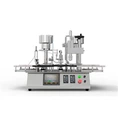
Hey there! As a supplier of ampoule machines, I often get asked about the filling accuracy of these nifty devices. So, I thought I'd sit down and write a blog post to explain it all in plain English.
Let's start by understanding what ampoule machines are. An Ampoule Machine is a piece of equipment used in the pharmaceutical and other industries to fill and seal small glass or plastic containers called ampoules. These ampoules are commonly used to store liquid medications, vaccines, and other sensitive substances.


Now, filling accuracy is a big deal when it comes to ampoule machines. Why? Well, imagine you're producing a life - saving vaccine. Each ampoule needs to have the exact right amount of the vaccine. Too little, and the patient might not get the full dose they need. Too much, and it could be wasteful or even dangerous.
So, what factors affect the filling accuracy of an ampoule machine?
1. Pump System
The pump is the heart of the filling process. There are different types of pumps used in ampoule machines, such as peristaltic pumps and piston pumps.
Peristaltic pumps work by squeezing a flexible tube to move the liquid. They're great because they don't come into direct contact with the liquid, which reduces the risk of contamination. However, their filling accuracy can be affected by the wear and tear of the tubing over time. If the tubing gets stretched or damaged, the amount of liquid being pumped can vary.
Piston pumps, on the other hand, use a piston to draw in and push out the liquid. They generally offer higher filling accuracy because they can be precisely controlled. The movement of the piston can be adjusted to dispense a specific volume of liquid with a high degree of precision.
2. Nozzle Design
The nozzle through which the liquid is dispensed also plays a crucial role. A well - designed nozzle should ensure a smooth and consistent flow of the liquid into the ampoule. If the nozzle is clogged or has an irregular shape, it can disrupt the flow and lead to inaccurate filling.
For example, if the nozzle has a small opening that gets partially blocked by debris, the liquid might not flow out at the right rate, resulting in under - filling. On the other hand, a nozzle with a too - large opening could cause splashing and over - filling.
3. Liquid Viscosity
The viscosity of the liquid being filled is another important factor. Viscosity refers to how thick or thin a liquid is. For instance, water has a low viscosity, while honey has a high viscosity.
Ampoule machines need to be calibrated differently depending on the viscosity of the liquid. High - viscosity liquids flow more slowly and require more force to pump. If the machine is not adjusted correctly for a high - viscosity liquid, it might not be able to fill the ampoules to the correct volume.
4. Machine Speed
The speed at which the ampoule machine operates can also impact filling accuracy. If the machine is running too fast, there might not be enough time for the liquid to be properly dispensed into the ampoules. This can lead to inconsistent filling levels.
On the other hand, running the machine too slowly can be inefficient. The key is to find the optimal speed that allows for accurate filling while still maintaining a reasonable production rate.
Measuring Filling Accuracy
Manufacturers of ampoule machines use various methods to measure filling accuracy. One common method is to take a sample of filled ampoules and weigh them. By comparing the weights of the filled ampoules to the expected weight based on the volume of liquid they should contain, they can determine the filling accuracy.
Another method is to use volumetric measurement devices. These devices can directly measure the volume of liquid in the ampoules. By comparing the measured volume to the target volume, manufacturers can identify any deviations and make adjustments to the machine.
Our Approach as a Supplier
At our company, we take filling accuracy very seriously. We use high - quality pumps and nozzles in our Ampoule Machine to ensure consistent and precise filling. Our machines are also equipped with advanced control systems that can be easily calibrated for different types of liquids and filling requirements.
We offer regular maintenance and calibration services to our customers. This helps to keep the machines in top - notch condition and ensures that they continue to provide accurate filling over time.
In addition to the filling part, our Ampoule Sealing Machine and Ampoule Sealer are also designed to work seamlessly with the filling process. A proper seal is essential to maintain the integrity of the filled ampoules.
Why Choose Our Ampoule Machines?
- High - Quality Components: We use only the best pumps, nozzles, and other components in our machines to ensure long - term reliability and accurate filling.
- Customization: We understand that different customers have different needs. That's why we offer customizable ampoule machines that can be tailored to your specific production requirements.
- Technical Support: Our team of experts is always on hand to provide technical support and advice. Whether you're having trouble with filling accuracy or any other aspect of the machine, we're here to help.
If you're in the market for an ampoule machine, don't hesitate to get in touch with us. We can provide you with more information about our products, answer any questions you might have, and even arrange a demonstration.
In conclusion, filling accuracy is a critical aspect of ampoule machines. By understanding the factors that affect it and choosing a reliable supplier, you can ensure that your production process is efficient, accurate, and compliant with industry standards. So, if you're looking for a top - quality ampoule machine, give us a shout. We're ready to help you take your production to the next level.
References
- Pharmaceutical Engineering Handbook, Third Edition
- Principles of Pharmaceutical Manufacturing, Second Edition