


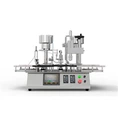
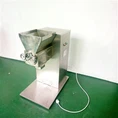
Hey there! As a supplier of China granulators, I often get asked about the feed rate of these machines. It's a super important topic because the feed rate can have a huge impact on the efficiency and performance of granulation processes. So, let's dive right in and explore what the feed rate of China granulators is all about.
First off, what exactly is the feed rate? Well, in simple terms, the feed rate refers to the amount of material that is fed into the granulator within a specific period of time. It's usually measured in kilograms per hour (kg/h) or pounds per hour (lb/h). The feed rate can vary depending on several factors, including the type of granulator, the material being processed, and the desired output.
There are different types of China granulators, and each has its own typical feed rate range. For example, a small-scale laboratory granulator might have a feed rate of around 1 - 10 kg/h. These are great for research and development purposes, where you're testing out new materials or formulations on a small scale. They're also relatively easy to operate and maintain, making them a popular choice for educational institutions and small businesses.
On the other hand, industrial - scale China granulators can have much higher feed rates. Some high - capacity industrial granulators can handle feed rates of 500 kg/h or even more. These are used in large manufacturing plants where large volumes of granules need to be produced continuously. They're designed to be robust and efficient, capable of working long hours without significant downtime.
Now, let's talk about the factors that affect the feed rate of China granulators.


Material Properties
The properties of the material being processed play a crucial role in determining the feed rate. For instance, if the material is very fine and powdery, it might flow easily into the granulator, allowing for a higher feed rate. However, if the material is sticky or has a high moisture content, it can clog the feed system, reducing the feed rate. Some materials might also require pre - treatment, such as drying or grinding, to improve their flowability and increase the feed rate. You can check out our Pulverizer Machine if you need to pre - process your materials.
Granulator Design
The design of the granulator itself is another important factor. Granulators with larger feed hoppers can generally accommodate more material at once, which can potentially lead to a higher feed rate. The type of feeding mechanism also matters. Some granulators use a gravity - fed system, where the material simply falls into the granulating chamber due to gravity. Others use a screw feeder or a belt feeder, which can provide more precise control over the feed rate. Our Granulator Machine comes in different designs to suit various needs.
Desired Output Quality
If you're aiming for high - quality granules with a specific size and shape, you might need to adjust the feed rate. A slower feed rate can sometimes result in better - formed granules because the granulator has more time to work on each particle. On the other hand, if you're less concerned about the quality and more focused on quantity, you can increase the feed rate. However, this might lead to a decrease in the overall quality of the granules.
Operating Conditions
The operating conditions of the granulator, such as temperature and pressure, can also affect the feed rate. For example, in some cases, higher temperatures can make the material more viscous, which can slow down the feed rate. Similarly, changes in pressure can impact the flow of the material through the feed system.
So, how do you determine the optimal feed rate for your China granulator? Well, it usually involves a bit of trial and error. You need to start with a conservative feed rate and gradually increase it while monitoring the quality of the output and the performance of the granulator. If you notice any issues, such as clogging or poor - quality granules, you might need to reduce the feed rate.
It's also a good idea to consult with the manufacturer or supplier of the granulator. As a China granulator supplier, we have a lot of experience and can provide you with valuable advice on the appropriate feed rate for your specific application. We can also offer training on how to operate the granulator effectively to achieve the best results.
In addition to the feed rate, there are other aspects of granulation that you need to consider. For example, the mixing process before granulation is very important. A well - mixed material will result in more uniform granules. You can take a look at our Mixing Machine to ensure proper mixing of your materials.
Another thing to keep in mind is the maintenance of the granulator. Regular maintenance, such as cleaning and lubrication, can help keep the granulator in good working condition and ensure a consistent feed rate.
If you're in the market for a China granulator and want to know more about the feed rate or any other aspects of the machine, don't hesitate to reach out. We're here to help you make the right choice for your business. Whether you're a small - scale operation or a large industrial manufacturer, we have the right granulator for you.
Contact us today to start a conversation about your granulation needs. We can provide you with detailed information, product specifications, and even arrange for a demonstration if you're interested. Let's work together to find the perfect granulator solution for your business and optimize your granulation process.
References
- Industrial Granulation Technology Handbook
- Journal of Pharmaceutical Sciences and Technology (related articles on granulation processes)