


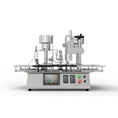
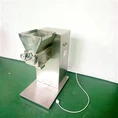
Let's talk about the difference between a vibratory mill and a pulverizer. As a pulverizer supplier, I've had my fair share of customers asking about these two machines. So, I thought it'd be a good idea to break down what sets them apart.
First off, let's get a basic understanding of what each machine does. A vibratory mill, as the name suggests, uses vibration to grind materials. It's got a chamber where the material and grinding media (like balls or rods) are placed. When the mill vibrates, the grinding media moves around, hitting and grinding the material into smaller particles.
On the other hand, a Pulverizer is a machine designed to crush, grind, and pulverize materials into fine powder. It can use different methods like impact, shear, or compression to break down the material. There are various types of pulverizers, such as hammer mills, jet mills, and ball mills, each with its own way of working.
Working Principle
The working principle is one of the major differences between the two. In a vibratory mill, the vibration is the key. The vibration frequency and amplitude are carefully controlled to ensure efficient grinding. The high - frequency vibration causes the grinding media to move in a complex pattern, which helps in achieving a more uniform particle size.


For a pulverizer, the working principle depends on its type. A hammer mill, for example, uses rotating hammers to impact the material. The material is fed into the mill, and the hammers smash it into smaller pieces. Jet mills, on the other hand, use high - velocity jets of air or steam to make the particles collide with each other, resulting in size reduction.
Particle Size Distribution
When it comes to the particle size they can achieve, there are some differences. A vibratory mill is great for producing relatively fine particles. It can often achieve a narrow particle size distribution, which means most of the particles are around the same size. This is because the grinding action in a vibratory mill is more controlled and uniform.
A pulverizer can produce a wide range of particle sizes. Depending on the type of pulverizer and its settings, you can get anything from coarse powder to extremely fine powder. For example, a jet mill can produce very fine particles, sometimes in the nanometer range, while a hammer mill may produce coarser particles suitable for some applications.
Capacity and Throughput
Capacity and throughput are important factors for industrial applications. A vibratory mill usually has a relatively lower capacity compared to some large - scale pulverizers. The size of the grinding chamber and the nature of the vibration - based grinding limit its ability to handle large volumes of material at once.
A Pulverizer can have a much higher capacity. Industrial - scale pulverizers are designed to handle large amounts of material continuously. They can be used in industries like mining, pharmaceuticals, and food processing, where high - volume production is required.
Energy Consumption
Energy consumption is a concern for any manufacturing process. Vibratory mills generally consume less energy compared to some types of pulverizers. The vibration mechanism is relatively energy - efficient, as it doesn't require a lot of power to generate the necessary vibration.
Some pulverizers, especially those that use high - speed rotation or high - pressure jets, can consume a significant amount of energy. For example, a jet mill needs a large amount of air or steam to operate, which requires a lot of power to generate.
Applications
The applications of these two machines also differ. Vibratory mills are often used in laboratory settings or for small - scale production where a high - quality, uniformly - sized powder is required. They are suitable for grinding brittle materials, such as ceramics, minerals, and some pharmaceuticals.
A pulverizer has a much wider range of applications. In the pharmaceutical industry, pulverizers are used to grind drugs into fine powders for tablet production. In the mining industry, they are used to crush and grind ores. They are also used in the food industry to grind grains and spices. And let's not forget about the chemical industry, where pulverizers are used to process various chemicals.
Maintenance
Maintenance is another aspect where they vary. Vibratory mills are relatively simple machines, and their maintenance is usually straightforward. The main components that need attention are the vibration mechanism and the grinding chamber. Regular inspection of the vibration motor and the replacement of worn - out parts are usually all that's needed.
A pulverizer can be more complex to maintain, depending on its type. For example, a hammer mill has rotating hammers that can wear out over time and need to be replaced. Jet mills require regular cleaning of the nozzles and the separation system to ensure efficient operation.
Cost
Cost is always a factor when choosing a machine. Vibratory mills are generally less expensive than some large - scale pulverizers. The cost of a vibratory mill includes the cost of the machine itself, the grinding media, and the energy consumption.
A pulverizer can have a wide range of costs. Small - scale pulverizers can be relatively affordable, but large - scale industrial pulverizers can be quite expensive, especially those with advanced features and high - capacity.
As a pulverizer supplier, I can offer you a wide range of Pulverizer options to suit your specific needs. Whether you're in the pharmaceutical, food, or mining industry, we have the right machine for you. We also provide high - quality Industrial Mixers that can work in conjunction with our pulverizers for a complete processing solution.
If you're interested in learning more about our products or have any questions about the differences between a vibratory mill and a pulverizer, don't hesitate to get in touch. We're here to help you find the best equipment for your business. Contact us today to start a conversation about your procurement needs.
References
- Perry, R. H., & Green, D. W. (1997). Perry's Chemical Engineers' Handbook. McGraw - Hill.
- Svarovsky, L. (2000). Solid - Liquid Separation. Butterworth - Heinemann.