


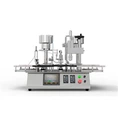
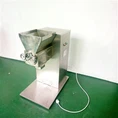
Hey there! As a supplier of Ampoule fillers, I often get asked about the difference between piston - type and peristaltic - type ampoule fillers. So, let's dive right in and break it down.
Piston - Type Ampoule Fillers
First up, piston - type ampoule fillers. These bad boys have been around for a while, and they're a classic in the industry. The basic principle behind a piston - type filler is pretty straightforward. It uses a piston that moves back and forth inside a cylinder. When the piston moves backward, it creates a vacuum that sucks the liquid into the cylinder. Then, when the piston moves forward, it pushes the liquid out through a nozzle and into the ampoule.
One of the biggest advantages of piston - type fillers is their accuracy. They can dispense very precise amounts of liquid, which is crucial when you're filling ampoules with medications or other high - value substances. The volume of liquid dispensed is directly related to the stroke length of the piston. By adjusting the stroke length, you can control the fill volume with a high degree of precision.


Another plus is their versatility. Piston - type fillers can handle a wide range of viscosities. Whether you're filling thin liquids like water or thick syrups, a piston - type filler can get the job done. They're also relatively easy to clean and maintain. Most models have a simple design, and the parts can be easily disassembled for cleaning and sterilization.
However, piston - type fillers do have some drawbacks. They can be a bit slow compared to other types of fillers. The back - and - forth motion of the piston takes time, especially if you're filling a large number of ampoules. Also, the mechanical parts of the piston - type filler can wear out over time, which may require regular replacement. This can add to the long - term cost of using the machine.
Peristaltic - Type Ampoule Fillers
Now, let's talk about peristaltic - type ampoule fillers. These are a newer technology, and they work in a completely different way. A peristaltic filler uses a rotating roller that squeezes a flexible tube. As the roller moves along the tube, it creates a wave - like motion that pushes the liquid through the tube and into the ampoule.
One of the main advantages of peristaltic fillers is their non - contact filling method. The liquid only comes into contact with the inside of the flexible tube, which means there's no risk of cross - contamination between different batches. This is a huge benefit, especially in industries where hygiene is of the utmost importance, like the pharmaceutical industry.
Peristaltic fillers are also very gentle on the liquid being filled. The squeezing action of the roller is a smooth, continuous motion, which minimizes the risk of foaming or splashing. This is particularly important when filling liquids that are sensitive to agitation.
In terms of speed, peristaltic fillers can be quite fast. They can fill a large number of ampoules in a relatively short period of time. The speed can be easily adjusted by changing the rotation speed of the roller.
However, peristaltic fillers also have their limitations. The fill volume accuracy may not be as high as that of piston - type fillers. The flexible tube can stretch over time, which can affect the fill volume. Also, the tubes need to be replaced regularly, which can be a hassle and add to the operating cost.
Comparison
Let's compare these two types of ampoule fillers side by side.
Accuracy: As mentioned earlier, piston - type fillers generally offer higher accuracy in fill volume. They're the go - to choice when you need to fill ampoules with very precise amounts of liquid. Peristaltic fillers, on the other hand, may have slightly less accuracy, but they're still suitable for many applications.
Speed: Peristaltic fillers are usually faster than piston - type fillers, especially when filling a large number of ampoules. If you have a high - volume production line, a peristaltic filler may be the better option.
Hygiene: Peristaltic fillers have a clear advantage in terms of hygiene. Their non - contact filling method reduces the risk of cross - contamination. Piston - type fillers can also be kept clean, but there's a slightly higher risk of contamination due to the mechanical parts coming into contact with the liquid.
Viscosity Handling: Piston - type fillers are more versatile when it comes to handling different viscosities. They can handle both thin and thick liquids with ease. Peristaltic fillers are better suited for thin to medium - viscosity liquids. Thick liquids may be more difficult to pump through the flexible tube.
Cost: In terms of upfront cost, piston - type fillers may be more expensive. However, the long - term cost depends on factors like maintenance and replacement parts. Piston - type fillers may require more frequent replacement of mechanical parts, while peristaltic fillers need regular tube replacement.
Which One to Choose?
So, which type of ampoule filler should you choose? Well, it depends on your specific needs. If you need high - precision filling, especially for high - value or sensitive products, a piston - type filler may be the way to go. On the other hand, if speed and hygiene are your top priorities, a peristaltic filler might be a better fit.
At our company, we offer a wide range of Ampoule Filler options, including both piston - type and peristaltic - type fillers. We also have Ampoule Machine and Ampoule Sealing Machine to complete your ampoule filling and sealing process.
If you're in the market for an ampoule filler, we'd love to help you make the right choice. Our team of experts can provide you with detailed information about our products and help you select the best machine for your specific requirements. Whether you're a small - scale producer or a large - scale manufacturer, we have a solution for you.
Don't hesitate to reach out to us for more information or to discuss your procurement needs. We're here to make your ampoule filling process as efficient and cost - effective as possible.
References
- Pharmaceutical Filling Equipment Handbook, various authors
- Industrial Packaging Technology Journal, multiple issues
- Personal experience and knowledge as an Ampoule filler supplier