


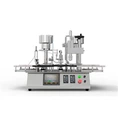
Hey there! As a supplier of Ampoule fillers, I often get asked about the accuracy of the filling time control of an ampoule filler. So, I thought I'd take a moment to share some insights on this topic.
First off, let's talk about why filling time control accuracy is so important. In the pharmaceutical and cosmetic industries, where ampoules are commonly used, precise filling is crucial. It ensures that each ampoule contains the correct dosage of the product, which is not only important for the effectiveness of the product but also for the safety of the end - user.


The accuracy of the filling time control of an ampoule filler depends on several factors. One of the key factors is the type of filling mechanism used. There are different types of filling mechanisms out there, such as piston filling, peristaltic filling, and gravity filling.
Piston filling is a popular choice. It works by using a piston to draw the liquid into a chamber and then push it out into the ampoule. The advantage of piston filling is that it can provide very high - accuracy filling. The movement of the piston can be precisely controlled, which means the filling time can be set with great precision. This is especially useful when dealing with viscous liquids or when very small volumes need to be filled. For example, in the production of some high - end cosmetics or injectable drugs, piston - filled ampoules are often used to ensure accurate dosing. You can learn more about our Ampoule Filler which uses advanced piston - filling technology.
Peristaltic filling, on the other hand, uses a rotating roller to compress a flexible tube, pushing the liquid through the tube and into the ampoule. This type of filling mechanism is great for filling sensitive liquids because it doesn't come into direct contact with the liquid. However, the accuracy of peristaltic filling can be affected by factors like the wear and tear of the tube over time. But with proper maintenance and calibration, it can still provide a good level of filling time control accuracy.
Gravity filling is the simplest of the three. It relies on the force of gravity to move the liquid from a reservoir into the ampoule. While it's a cost - effective option, it may not be as accurate as piston or peristaltic filling, especially when it comes to filling small volumes or dealing with liquids of different viscosities.
Another factor that affects the accuracy of filling time control is the control system of the ampoule filler. Modern ampoule fillers are equipped with advanced control systems that use sensors and programmable logic controllers (PLCs). These sensors can detect the level of liquid in the ampoule, the position of the filling nozzle, and other important parameters. The PLC then uses this information to adjust the filling time in real - time. For example, if the sensor detects that the liquid level in an ampoule is lower than expected, the PLC can extend the filling time slightly to ensure the correct volume is filled.
The quality of the components used in the ampoule filler also plays a significant role. High - quality valves, pumps, and nozzles are essential for accurate filling time control. Cheap or low - quality components may not open and close at the right time, or they may leak, which can lead to inaccurate filling. At our company, we use only the best - quality components in our Ampoule Filling Machine to ensure maximum accuracy.
Calibration is also a crucial step in maintaining the accuracy of the filling time control. Regular calibration ensures that the filling machine is operating at its optimal level. This involves checking and adjusting the settings of the control system, as well as verifying the accuracy of the filling volume. Most ampoule fillers come with a calibration procedure that should be carried out at regular intervals, usually after a certain number of production cycles or at specific time intervals.
When it comes to measuring the accuracy of the filling time control, there are several methods. One common method is to weigh a sample of filled ampoules. By comparing the actual weight of the filled ampoules with the expected weight based on the target filling volume and the density of the liquid, you can calculate the filling accuracy. Another method is to use vision inspection systems. These systems can capture images of the filled ampoules and analyze the liquid level to determine if it meets the required specifications.
In addition to the filling process itself, the interaction between the filling and sealing processes can also affect the overall accuracy. After the ampoule is filled, it needs to be sealed quickly and properly. Our Ampoule Sealing Machine is designed to work in harmony with the filling machine. It ensures that the ampoule is sealed at the right time, without any spillage or leakage that could affect the accuracy of the filling.
To sum it up, the accuracy of the filling time control of an ampoule filler is influenced by multiple factors, including the filling mechanism, the control system, the quality of components, calibration, and the interaction with the sealing process. At our company, we've spent years perfecting our ampoule fillers to ensure the highest level of accuracy. Whether you're in the pharmaceutical, cosmetic, or any other industry that requires precise ampoule filling, our machines can meet your needs.
If you're interested in learning more about our ampoule fillers or have any questions about the accuracy of filling time control, feel free to reach out. We're always happy to have a chat and help you find the best solution for your production requirements. Contact us today to start a conversation about your ampoule - filling needs, and let's work together to take your production to the next level.
References
- Pharmaceutical Filling Technology Handbook
- Cosmetic Manufacturing and Packaging Guide