


As a trusted supplier of granulators, I've witnessed firsthand the diverse needs and challenges our clients face when it comes to producing high - quality granules. The quality of granules produced by a granulator is influenced by a multitude of factors, each playing a crucial role in the final outcome. In this blog, I'll delve into these factors to help you understand how to optimize your granulation process.
Raw Material Characteristics
The nature of the raw materials used is the first and most fundamental factor affecting granule quality. Different materials have distinct physical and chemical properties that can significantly impact the granulation process.
Particle Size and Distribution
The particle size of the raw materials is of utmost importance. If the particles are too large, they may not bind together effectively during granulation, resulting in granules that are either too loose or have inconsistent sizes. On the other hand, if the particles are too small, they can cause problems such as excessive dust generation and poor flowability. A narrow particle size distribution is generally preferred as it leads to more uniform granules. For example, in the pharmaceutical industry, a precise particle size distribution of active pharmaceutical ingredients (APIs) is crucial for ensuring consistent drug dosage in each granule.
Moisture Content
Moisture content in the raw materials can greatly affect granule formation. Adequate moisture acts as a binder, helping the particles to adhere to each other. However, too much moisture can lead to clumping, making it difficult to form discrete granules. It can also cause issues during drying, such as the formation of a hard crust on the surface of the granules. Conversely, insufficient moisture may result in weak granules that are prone to breakage. To control the moisture content, you may need to pre - treat the raw materials, for instance, by drying or adding a specific amount of water or binder solution.
Chemical Composition
The chemical properties of the raw materials, such as solubility, reactivity, and pH, can influence the granulation process. Some materials may react with the binder or other additives, affecting the strength and stability of the granules. For example, acidic or alkaline materials may interact with certain binders, altering their effectiveness. Understanding the chemical composition of the raw materials is essential for selecting the appropriate binder and granulation method.
Binder Selection and Usage
Binders are substances added to the raw materials to hold the particles together and form granules. The choice of binder and its proper usage are critical for granule quality.
Type of Binder
There are various types of binders available, including natural binders like starch and gelatin, and synthetic binders such as polyvinylpyrrolidone (PVP) and hydroxypropyl methylcellulose (HPMC). Each binder has its own set of properties, such as binding strength, solubility, and stability. The selection of the binder depends on the characteristics of the raw materials and the intended use of the granules. For example, in food applications, natural binders are often preferred due to their safety and acceptability.
Binder Concentration
The concentration of the binder in the granulation mixture is another important factor. A higher binder concentration generally leads to stronger granules, but it can also increase the cost and may cause issues such as slow dissolution of the granules in some applications. On the other hand, a lower binder concentration may result in weak granules. Finding the optimal binder concentration requires careful experimentation and optimization.
Binder Addition Method
The way the binder is added to the raw materials can also affect granule quality. Binders can be added as a dry powder, a solution, or a suspension. Adding the binder as a solution is often preferred as it allows for more uniform distribution of the binder throughout the mixture. However, the temperature and rate of addition of the binder solution can also impact granule formation. For example, adding the binder solution too quickly may cause local over - wetting and clumping.
Granulation Process Parameters
The operating parameters of the granulator itself have a direct impact on the quality of the granules produced.
Mixing Intensity and Time
Proper mixing is essential for ensuring uniform distribution of the raw materials and binder. The intensity and duration of mixing can affect the size, shape, and density of the granules. Insufficient mixing may result in non - uniform granules, with some areas having a higher concentration of binder or raw materials than others. On the other hand, over - mixing can lead to the breakage of granules. To achieve optimal mixing, you can refer to our Mixing Machine which is designed to provide efficient and uniform mixing.
Granulation Temperature
Temperature plays a crucial role in the granulation process. Higher temperatures can increase the solubility of the binder, facilitating granule formation. However, excessive temperatures can cause degradation of the raw materials or binder, especially in heat - sensitive materials. In addition, temperature can affect the evaporation rate of the moisture in the granules during drying. Controlling the granulation temperature within a suitable range is necessary for producing high - quality granules.
Compression Force (if applicable)
In some granulation methods, such as roller compaction, compression force is applied to form granules. The compression force affects the density, hardness, and porosity of the granules. Higher compression forces generally result in denser and harder granules, but they may also reduce the porosity, which can affect the dissolution rate of the granules. Adjusting the compression force according to the requirements of the final product is important.
Equipment Design and Condition
The design and condition of the granulator can significantly impact granule quality.
Granulator Type
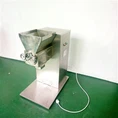
There are different types of granulators available, such as high - shear granulators, fluid - bed granulators, and extrusion granulators. Each type has its own advantages and disadvantages, and the choice depends on the nature of the raw materials, the desired granule characteristics, and the production scale. For example, high - shear granulators are suitable for producing dense and uniform granules, while fluid - bed granulators are often used for producing porous granules. You can explore our range of Granulators to find the one that best suits your needs.


Equipment Wear and Tear
The condition of the granulator is also important. Over time, the components of the granulator, such as the blades, sieves, and mixers, may wear out. Worn - out components can lead to inconsistent granule size and shape, as well as reduced production efficiency. Regular maintenance and inspection of the granulator are necessary to ensure its proper functioning and to produce high - quality granules.
Feeding System
The feeding system of the granulator should be able to deliver the raw materials and binder at a consistent rate. An uneven feeding rate can cause fluctuations in the granulation process, resulting in non - uniform granules. A well - designed feeding system, such as the one in our Industrial Mixer Machine, can help to ensure a stable and continuous granulation process.
Post - Granulation Processing
After the granules are formed, post - granulation processing steps, such as drying, screening, and coating, can also affect their quality.
Drying
Drying is an important step to remove the excess moisture from the granules. The drying temperature, time, and airflow rate can all influence the final properties of the granules. Over - drying can cause the granules to become brittle and prone to breakage, while under - drying can lead to microbial growth and reduced shelf - life.
Screening
Screening is used to separate the granules into different size fractions. This helps to ensure that the final product has a consistent granule size. By removing oversized and undersized granules, you can improve the quality and performance of the granules in the end - use application.
Coating
Coating can be applied to the granules to improve their appearance, stability, and release properties. The type of coating material and the coating process parameters need to be carefully selected to achieve the desired results.
In conclusion, the quality of granules produced by a granulator is affected by a complex interplay of factors related to raw materials, binders, granulation process parameters, equipment, and post - granulation processing. By understanding these factors and optimizing each aspect of the granulation process, you can produce high - quality granules that meet your specific requirements.
If you're looking for high - performance granulators or need advice on optimizing your granulation process, we're here to help. Our team of experts can provide you with customized solutions based on your unique needs. Contact us to start a conversation about your granulation requirements and explore how we can work together to achieve the best results.
References
- Aulton, M. E., & Taylor, P. K. (2013). Aulton's Pharmaceutics: The Design and Manufacture of Medicines. Churchill Livingstone.
- Gad, S. C. (Ed.). (2010). Pharmaceutical Manufacturing Handbook: Regulations and Quality Control. John Wiley & Sons.
- Parikh, D. M., & Parikh, R.D. (2016). Granulation Technology in Pharmaceutical Dosage Forms. CRC Press.