


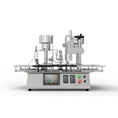
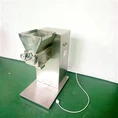
Hey there! As a supplier of China pulverizers, I'm super stoked to dive into the technical parameters of these awesome machines with you. Whether you're in the pharmaceutical, chemical, or food industry, understanding these specs is crucial for making the right purchase decision. So, let's get started!
Capacity
One of the most important technical parameters of a pulverizer is its capacity. This refers to the amount of material the machine can process within a given time frame. Capacity is usually measured in kilograms per hour (kg/h) or tons per day (t/d).
The capacity of a pulverizer depends on several factors, including the type of material being processed, the fineness of the final product, and the power of the machine. For example, a small-scale pulverizer might have a capacity of 50 - 200 kg/h, which is suitable for small businesses or laboratories. On the other hand, large industrial pulverizers can have a capacity of several tons per hour, making them ideal for large-scale production.
When choosing a pulverizer, it's important to consider your production requirements. If you have a high-volume production line, you'll need a pulverizer with a large capacity. However, if you only need to process small amounts of material, a smaller capacity machine will be more cost-effective.
Fineness of Grinding
Another key parameter is the fineness of grinding. This is the particle size of the final product after it has been processed by the pulverizer. The fineness of grinding is usually measured in microns (μm).
Different applications require different levels of fineness. For instance, in the pharmaceutical industry, a very fine powder is often required for better dissolution and absorption. In this case, you might need a pulverizer that can achieve a fineness of 1 - 50 μm. On the other hand, in the food industry, a coarser powder might be acceptable, with a fineness of 50 - 200 μm.
Most modern pulverizers offer adjustable fineness of grinding. This means you can change the settings of the machine to achieve the desired particle size. Some pulverizers use screens or sieves to control the fineness, while others use more advanced technologies such as air classifiers.
Power Consumption
Power consumption is an important consideration, especially for large-scale operations. The power of a pulverizer is usually measured in kilowatts (kW). A higher power machine can generally process more material, but it also consumes more electricity.
When choosing a pulverizer, you need to balance the power consumption with the capacity and fineness requirements. A more energy-efficient machine will not only save you money on electricity bills but also reduce your environmental impact. Some pulverizers are designed with energy-saving features, such as high-efficiency motors and optimized grinding mechanisms.
Grinding Method
There are several grinding methods used in pulverizers, including impact grinding, compression grinding, and shear grinding.
- Impact Grinding: In this method, the material is struck by high-speed hammers or blades, causing it to break into smaller particles. Impact grinding is suitable for brittle materials and can achieve a relatively fine powder.
- Compression Grinding: This method involves applying pressure to the material between two surfaces, such as rollers or plates. Compression grinding is effective for hard and tough materials.
- Shear Grinding: Shear grinding uses a cutting or shearing action to break the material. This method is often used for fibrous or elastic materials.
The choice of grinding method depends on the type of material being processed. For example, if you're grinding wheat flour, impact grinding might be the best option. But if you're processing metal ores, compression grinding could be more suitable.
Material of Construction
The material of construction of a pulverizer is also an important factor. The main components of a pulverizer, such as the grinding chamber, blades, and screens, need to be made of materials that are durable, corrosion-resistant, and easy to clean.
Common materials used in pulverizer construction include stainless steel, carbon steel, and alloy steel. Stainless steel is a popular choice because it is resistant to corrosion and is easy to maintain. It is often used in the pharmaceutical and food industries, where hygiene is a top priority. Carbon steel is more affordable but may require more maintenance to prevent rusting. Alloy steel is used for applications where high strength and wear resistance are required.


Other Features
In addition to the above parameters, modern pulverizers often come with a range of other features. For example, some pulverizers are equipped with dust collection systems to reduce air pollution and improve the working environment. Others have automatic feeding and discharging systems, which can increase the efficiency of the production process.
Some pulverizers also have safety features, such as overload protection and emergency stop buttons. These features are designed to protect the operators and the machine from damage.
Comparison with Other Machines
It's also worth comparing pulverizers with other related machines, such as Industrial Mixers and Granulators. While pulverizers are used to reduce the particle size of materials, industrial mixers are used to blend different materials together. Granulators, on the other hand, are used to form granules from powders or pastes.
If you need to perform multiple processes in your production line, you might consider a combination of these machines. For example, you could use a pulverizer to grind the raw materials, an industrial mixer to blend them, and a granulator to form the final product into granules.
Why Choose Our China Pulverizers
As a supplier of China pulverizers, we offer high-quality machines at competitive prices. Our pulverizers are designed with the latest technologies and are built to last. We have a wide range of models to choose from, with different capacities, fineness levels, and features.
We also provide excellent after-sales service, including installation, training, and maintenance. Our team of experts is always ready to help you with any questions or problems you might have. Whether you're a small business or a large corporation, we can provide you with the right pulverizer solution for your needs.
Contact Us for Purchase
If you're interested in our Pulverizer, don't hesitate to contact us for more information and to discuss your specific requirements. We're here to help you make the best decision for your business. Whether you need a single machine or a complete production line, we can work with you to find the perfect solution.
References
- "Principles of Powder Technology" by J. S. Reed
- "Industrial Grinding Mills: Design and Operations" by R. P. King
So, that's a comprehensive overview of the technical parameters of a China pulverizer. I hope this blog has been helpful to you. If you have any more questions, feel free to leave a comment below or contact us directly.