


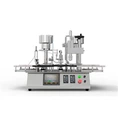
Hey there! As a supplier of monoblock fillers, I'm super excited to dive into the world of filling methods used in these amazing machines. Monoblock fillers are all - in - one units that combine multiple functions like cleaning, filling, and capping in a single system. They're a game - changer in the packaging industry, and understanding their filling methods is crucial for anyone looking to invest in one.
Let's start with the most common filling method: volumetric filling. In volumetric filling, the monoblock filler dispenses a specific volume of product into each container. This method is great for products with consistent viscosity, like water, juice, or milk. The machine uses pistons, pumps, or gravity to measure and transfer the exact amount of liquid.
Piston fillers are a popular choice within volumetric filling. They work by drawing the product into a cylinder using a piston. Once the cylinder is filled with the desired volume, the piston pushes the product out into the container. This method is highly accurate and can handle a wide range of viscosities, from thin liquids to thick creams. For example, if you're filling a Monoblock Machine with a piston filler, it can precisely fill small vials of essential oils as well as large bottles of shampoo. Check out Monoblock Machine to learn more about the different applications.
Another type of volumetric filling is pump filling. Gear pumps, peristaltic pumps, and diaphragm pumps are commonly used in monoblock fillers. Gear pumps are ideal for high - viscosity products like honey or molasses. They work by using two meshing gears to trap and transfer the product. Peristaltic pumps, on the other hand, are great for sensitive products because they use a flexible tube that is squeezed by rollers to move the liquid. This method ensures that the product is not damaged during the filling process. If you're in the business of filling eye drops, a Eye Drop Filling Machine with a peristaltic pump can be a great choice as it provides gentle and accurate filling.
Gravity filling is also a simple yet effective volumetric filling method. It relies on the force of gravity to move the product from a holding tank into the containers. This method is best suited for thin, free - flowing liquids like alcohol or vinegar. The machine has a valve that opens and closes to control the flow of the liquid. Gravity filling is cost - effective and easy to maintain, making it a popular option for small - scale production.


Now, let's talk about another major category of filling methods: weight filling. In weight filling, the monoblock filler measures the weight of the product being dispensed into each container. This method is more accurate than volumetric filling, especially for products with varying densities. For example, if you're filling a container with a mixture of solids and liquids, the weight can be a more reliable measure than volume.
Weight filling is commonly used in the food industry, where precision is crucial. For instance, when filling packages of nuts or candies, a weight - filling monoblock filler can ensure that each package contains the correct amount of product. This method is also great for high - value products, as it reduces waste and ensures consistent quality.
Time - pressure filling is another interesting method. It works by applying pressure to the product for a specific period of time to dispense a certain amount. This method is often used for filling small containers, like perfume vials or sample bottles. The pressure and time can be adjusted to control the volume of the product being filled. Time - pressure filling is fast and efficient, making it suitable for high - speed production lines.
Level filling is a method that focuses on filling the containers to a specific level. This is commonly used for products where the appearance of the filled container is important, like glass bottles of wine or spirits. The machine uses sensors to detect the liquid level in the container and stops filling when the desired level is reached. Level filling gives a uniform and professional look to the filled products.
When it comes to choosing the right filling method for your monoblock filler, there are several factors to consider. The viscosity of the product is a major factor. As we've seen, thin liquids are better suited for gravity or time - pressure filling, while thick liquids require piston or pump filling. The accuracy requirements also play a role. If you need very precise measurements, weight filling might be the way to go.
The production volume is another important consideration. For high - volume production, fast - filling methods like time - pressure or pump filling are more suitable. On the other hand, for small - batch production, gravity or piston filling can be more cost - effective.
As a supplier of Monoblock Filler, I've seen firsthand how the right filling method can make a huge difference in the efficiency and quality of the packaging process. Whether you're in the food, beverage, pharmaceutical, or cosmetic industry, there's a monoblock filler and filling method that's perfect for your needs.
If you're thinking about investing in a monoblock filler or want to learn more about the different filling methods, don't hesitate to reach out. We can have a detailed discussion about your specific requirements and help you choose the best solution for your business. Our team of experts is always ready to assist you in making the right decision.
In conclusion, the world of monoblock filler filling methods is diverse and full of options. Each method has its own advantages and is suitable for different types of products and production requirements. By understanding these methods, you can make an informed decision and take your packaging process to the next level.
References
- Packaging Machinery Manufacturers Institute (PMMI) - Industry reports on filling technologies
- Journal of Food Engineering - Research on accurate filling methods for food products
So, what are you waiting for? Let's start this journey together and find the perfect monoblock filler for your business!