


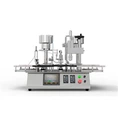
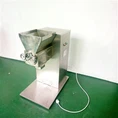
Hey there! As a supplier of granulators, I've seen a lot of folks scratching their heads over the differences between batch and continuous granulators. So, I thought I'd break it all down for you in this blog.
Let's start with batch granulators. These bad boys have been around for ages. A batch granulator works like a well - organized party. You gather all your ingredients (raw materials) in one go, throw them into the granulator, and let it do its thing. Once the granulation process is complete, you take out the finished product, clean up the machine, and then start all over again with a new batch.
One of the biggest advantages of batch granulators is their flexibility. If you're working on a small - scale production or you're dealing with different formulations all the time, batch granulators are your best bet. You can easily adjust the process parameters for each batch. For example, if you're making different types of pharmaceutical tablets, you can change the amount of binder, the mixing time, and the granulation speed for each batch according to the specific requirements of the product.
Another plus is quality control. Since each batch is processed separately, it's easier to monitor and ensure the quality of the granules. You can take samples from each batch and check for things like particle size distribution, density, and moisture content. If there's an issue with a particular batch, it won't affect the others.
However, batch granulators also have their drawbacks. The main one is the time - consuming nature of the process. You have to stop and start the machine for each batch, which means there's a lot of downtime for cleaning and setup. This can significantly slow down production, especially if you have high - volume orders. Also, the labor cost can be relatively high because you need someone to oversee each batch and handle the cleaning and setup tasks.


Now, let's talk about continuous granulators. These are like the assembly lines of the granulation world. They keep running non - stop, continuously feeding in raw materials and spitting out finished granules.
The biggest advantage of continuous granulators is their high productivity. They can produce a large amount of granules in a relatively short time. This makes them ideal for large - scale production. For example, if you're a big pharmaceutical company that needs to produce millions of tablets every day, a continuous granulator can keep up with the demand without a hitch.
Continuous granulators are also more efficient in terms of energy consumption. Since they run continuously, they don't have the start - stop cycles that batch granulators do. This means less energy is wasted on heating up and cooling down the machine.
But continuous granulators aren't without their problems. They lack the flexibility of batch granulators. Once the process is set up, it's difficult to make quick changes to the formulation or process parameters. If you need to switch between different products, it can take a long time to clean the machine thoroughly and re - configure it for the new product.
Another issue is quality control. Since the granules are produced continuously, it's harder to monitor the quality of each individual "batch" (although in a continuous process, the concept of a batch is a bit different). If there's a problem with the process, it can affect a large amount of product before it's detected.
In the pharmaceutical industry, the choice between batch and continuous granulators depends on a variety of factors. For research and development or small - scale production of new drugs, batch granulators are often preferred because of their flexibility. On the other hand, for mass - producing well - established drugs, continuous granulators are the go - to option for their high productivity.
If you're in the market for a granulator, you might want to check out our Granulators page. We offer a wide range of both batch and continuous granulators to suit different needs. Our Granulators factory is equipped with state - of - the - art technology to ensure high - quality products. And if you want to learn more about our Granulator Machine, just click on the link.
In conclusion, both batch and continuous granulators have their own pros and cons. The key is to understand your specific production requirements and choose the one that best fits your needs. Whether you need a small - scale, flexible solution or a high - volume, efficient one, we've got you covered.
If you're interested in purchasing a granulator or have any questions, don't hesitate to reach out. We're here to help you make the right choice and get the best granulation solution for your business. Come and talk to us about your requirements, and we'll work together to find the perfect granulator for you.
References:
[1] "Extrusion - Spheronization - Technology, Troubleshooting, and Scale - Up" by Dietmar Breitkreutz.
[2] "Pharmaceutical Dosage Forms: Tablets, Volume 1: Unit Operations, Production, and Packaging" edited by Herbert A. Lieberman, Leon Lachman, and Joseph B. Schwartz.