


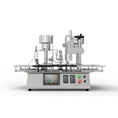
Maintaining the filling accuracy of a monoblock filler over time is crucial for any business that relies on precise liquid filling processes. As a leading supplier of Monoblock Filler, we understand the challenges that come with ensuring consistent and accurate filling. In this blog post, we will share some valuable insights and practical tips on how to maintain the filling accuracy of your monoblock filler, which will help you optimize your production efficiency and product quality.


Understanding the Importance of Filling Accuracy
Filling accuracy is not just about meeting regulatory requirements; it also directly impacts your bottom line. Inaccurate filling can lead to product waste, customer dissatisfaction, and potential legal issues. For example, underfilling can result in customers receiving less product than advertised, which may damage your brand reputation. On the other hand, overfilling can increase production costs due to excessive use of raw materials. Therefore, maintaining high filling accuracy is essential for ensuring product quality, customer satisfaction, and cost - effectiveness.
Factors Affecting Filling Accuracy
Before we discuss how to maintain filling accuracy, it is important to understand the factors that can affect it. These factors can be broadly categorized into mechanical, environmental, and operational factors.
Mechanical Factors
- Wear and Tear: Over time, the moving parts of a monoblock filler, such as pumps, valves, and pistons, can experience wear and tear. This can lead to changes in the flow rate and volume of the liquid being filled, resulting in inaccurate filling.
- Calibration: Incorrect calibration of the filling system can also cause filling inaccuracies. If the filler is not calibrated properly, it may dispense too much or too little liquid.
- Seal Integrity: Leaky seals in the filling system can allow air or liquid to escape, which can affect the filling accuracy. Seals need to be regularly inspected and replaced if they are worn or damaged.
Environmental Factors
- Temperature and Humidity: Changes in temperature and humidity can affect the viscosity of the liquid being filled. For example, a decrease in temperature can increase the viscosity of the liquid, which may slow down the filling process and result in inaccurate filling.
- Air Pressure: Fluctuations in air pressure can also impact the filling accuracy. In an environment with unstable air pressure, the flow of the liquid through the filling system may be inconsistent.
Operational Factors
- Operator Error: Improper operation of the monoblock filler can lead to filling inaccuracies. Operators need to be trained to use the filler correctly, including setting the correct filling parameters and monitoring the filling process.
- Product Variation: Different products may have different viscosities, densities, and chemical properties. These variations can affect the filling accuracy, especially if the filler is not adjusted to accommodate these differences.
Strategies for Maintaining Filling Accuracy
Regular Maintenance
- Scheduled Inspections: Establish a regular maintenance schedule for your monoblock filler. Inspect the moving parts, seals, and pipes for wear and tear, and replace any damaged components promptly. For example, check the O - rings in the valves and pumps every few months to ensure they are in good condition.
- Lubrication: Proper lubrication of the moving parts is essential to reduce friction and wear. Follow the manufacturer's recommendations for lubrication intervals and use the appropriate lubricants.
- Cleaning: Regular cleaning of the filling system is crucial to prevent the buildup of debris and contaminants. This can help maintain the integrity of the seals and ensure smooth operation of the filler.
Calibration
- Initial Calibration: When installing a new monoblock filler or after major maintenance, it is important to perform an initial calibration. This involves setting the filling parameters, such as volume, flow rate, and filling time, to ensure accurate filling.
- Periodic Re - calibration: Over time, the performance of the filler may change due to wear and tear. Therefore, it is recommended to re - calibrate the filler periodically, for example, every six months or after a certain number of filling cycles.
Environmental Control
- Temperature and Humidity Regulation: If possible, control the temperature and humidity in the filling area. This can be achieved by using air conditioning and dehumidifiers. Maintaining a stable environment can help ensure consistent viscosity of the liquid being filled.
- Air Pressure Stabilization: Use air pressure regulators to maintain a stable air pressure in the filling system. This can help ensure a consistent flow of the liquid through the filler.
Operator Training
- Comprehensive Training Programs: Provide comprehensive training programs for your operators. Train them on how to operate the monoblock filler correctly, including setting the filling parameters, monitoring the filling process, and performing basic maintenance tasks.
- Ongoing Training and Refresher Courses: Offer ongoing training and refresher courses to keep operators updated on the latest operating procedures and best practices. This can help reduce operator error and improve filling accuracy.
Product - Specific Adjustments
- Product Testing: Before filling a new product, conduct product testing to determine the optimal filling parameters. This may involve adjusting the pump speed, valve opening time, and other settings to ensure accurate filling.
- Flexible Filling Systems: Consider using a monoblock filler with a flexible filling system that can be easily adjusted to accommodate different products. For example, some fillers allow for quick changeover between different filling volumes and product viscosities.
Monitoring and Quality Control
- In - Process Monitoring: Implement in - process monitoring techniques to detect any filling inaccuracies in real - time. This can include using sensors to measure the volume of the filled product and comparing it to the set target.
- Statistical Process Control (SPC): Use SPC methods to analyze the filling data over time. This can help identify trends and patterns in the filling accuracy and allow for proactive adjustments to be made.
- Final Product Inspection: Conduct final product inspections to ensure that the filled products meet the required quality standards. This can involve weighing or measuring a sample of the filled products to verify the filling accuracy.
Conclusion
Maintaining the filling accuracy of a monoblock filler over time requires a comprehensive approach that addresses mechanical, environmental, and operational factors. By implementing regular maintenance, calibration, environmental control, operator training, and quality control measures, you can ensure that your monoblock filler continues to provide accurate and consistent filling.
As a reliable supplier of Monoblock Filler, we are committed to providing high - quality filling solutions and excellent customer support. If you are looking to improve the filling accuracy of your production line or need assistance with your monoblock filler, we invite you to contact us for a consultation. Our team of experts will be happy to help you find the best solutions for your specific needs. Whether you are in the pharmaceutical industry looking for an Eye Drop Filling Machine or the food and beverage industry in need of a Monoblock Machine, we have the expertise and products to meet your requirements.
References
- "Liquid Filling Machine Handbook", Industry Press, 20XX
- "Best Practices in Filling Accuracy Maintenance", Journal of Manufacturing Technology, Vol. XX, No. XX, 20XX
- Manufacturer's Manual for Monoblock Fillers, [Manufacturer Name], 20XX