


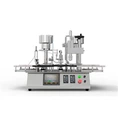
In the manufacturing industry, especially in sectors like pharmaceuticals, cosmetics, and food and beverage, capping machines play a crucial role. As a capping machine supplier, I've seen firsthand how increasing the production capacity of these machines can significantly boost a company's bottom line. In this blog, I'll share some practical tips on how to increase the production capacity of a capping machine.
1. Optimize the Machine Setup
First things first, the initial setup of the capping machine is super important. Make sure it's properly aligned and calibrated. A misaligned machine can lead to frequent jams and errors, which slow down the production process. Check the conveyor belts, the capping heads, and all the sensors regularly. If the conveyor belt isn't moving at the right speed, it can cause bottles to bunch up or fall over. And if the capping heads aren't adjusted correctly, they might not seal the caps properly, leading to rework.
For example, when setting up a Vial Capping Machine, ensure that the vials are fed smoothly onto the conveyor. Adjust the height and angle of the capping heads according to the size and shape of the vials. This way, the machine can work efficiently right from the start.
2. Upgrade the Machine's Components
Old or worn - out components can be a major bottleneck in increasing production capacity. Consider upgrading critical parts like the motors, sensors, and capping heads. A more powerful motor can drive the machine at a higher speed, while advanced sensors can detect and correct errors more quickly.
Let's say your Vial Sealing Machine has an outdated sensor. It might take longer to detect a misaligned vial or a loose cap. By upgrading to a high - tech sensor, the machine can identify these issues in real - time and make adjustments immediately, reducing downtime and increasing the number of vials sealed per hour.
3. Implement Preventive Maintenance
Regular maintenance is key to keeping the capping machine running at its best. Create a preventive maintenance schedule that includes tasks like cleaning, lubricating, and inspecting the machine. This helps to catch potential problems before they turn into major breakdowns.
For instance, clean the capping heads regularly to prevent the build - up of dirt and debris. Lubricate the moving parts to reduce friction and wear. By doing these simple tasks on a regular basis, you can extend the lifespan of the machine and keep it operating at a high production capacity.
4. Train the Operators
Well - trained operators can make a huge difference in the production capacity of a capping machine. Provide comprehensive training on how to operate the machine, troubleshoot common problems, and perform basic maintenance tasks.
An operator who knows how to quickly adjust the settings of a Vial Filler when there's a change in vial size or filling volume can keep the production line moving smoothly. They can also identify early signs of machine malfunction and take appropriate action, minimizing downtime.
5. Improve the Feeding System
The feeding system is responsible for supplying the bottles or vials to the capping machine. A slow or unreliable feeding system can limit the production capacity. Look for ways to improve the feeding speed and accuracy.
You could use a high - speed hopper feeder that can quickly sort and feed the containers onto the conveyor. Or, implement a vision system to ensure that only properly oriented containers are fed into the machine. This reduces the chances of jams and rejections, allowing the capping machine to work at a faster pace.


6. Use Automation and Integration
Automation can greatly increase the production capacity of a capping machine. Consider integrating the capping machine with other equipment in the production line, such as filling machines and labeling machines. This creates a seamless workflow where the products move smoothly from one process to the next.
For example, an automated system can transfer the filled vials directly from the Vial Filler to the Vial Capping Machine without any manual intervention. This not only speeds up the process but also reduces the risk of human error.
7. Analyze and Optimize the Production Process
Regularly analyze the production data to identify areas for improvement. Look at metrics like cycle time, downtime, and rejection rate. Based on this analysis, make adjustments to the machine settings, the feeding system, or the operator training.
For instance, if you notice that the rejection rate is high during a particular shift, it could be due to operator error or a problem with the machine settings. By investigating the root cause and making the necessary changes, you can improve the overall production capacity.
8. Consider a Higher - Capacity Machine
If you've tried all the above methods and still can't meet your production demands, it might be time to consider upgrading to a higher - capacity capping machine. There are various models available in the market that can handle a larger number of containers per minute.
When choosing a new machine, make sure to consider factors like the size and shape of your containers, the required capping speed, and the level of automation. Our company offers a wide range of capping machines that can be customized to meet your specific needs.
Increasing the production capacity of a capping machine is a multi - faceted process that involves optimizing the machine setup, upgrading components, implementing preventive maintenance, training operators, improving the feeding system, using automation, analyzing the production process, and sometimes even upgrading to a higher - capacity machine. By following these tips, you can significantly boost the productivity of your capping machine and increase your company's competitiveness in the market.
If you're interested in learning more about how our capping machines can help you increase your production capacity, or if you have any questions about the tips mentioned in this blog, don't hesitate to reach out. We're here to assist you in finding the best solutions for your production needs.
References
- Industry reports on capping machine technology and performance.
- Manufacturer's manuals for various capping machines.
- Case studies of companies that have successfully increased their capping machine production capacity.