


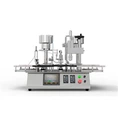
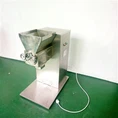
Hey there! As a granulators price supplier, I've seen firsthand how the complexity of granulators' design can have a huge impact on the price. In this blog, I'm gonna break down the relationship between design complexity and cost, so you can make more informed decisions when it comes to purchasing granulators.
Let's start by understanding what we mean by the complexity of a granulator's design. A granulator is a machine used to reduce large solid materials into smaller, more manageable granules. The design complexity can involve a whole bunch of factors, such as the type of cutting mechanism, the number of moving parts, the level of automation, and the material used in construction.
First off, the cutting mechanism is a major factor. There are different types of cutting systems in granulators, like single - shaft and twin - shaft designs. A single - shaft granulator has a relatively simple design. It usually consists of a single rotating shaft with knives attached. This straightforward design means fewer parts to manufacture and assemble, which generally results in a lower cost.
On the other hand, twin - shaft granulators are more complex. They have two counter - rotating shafts with intermeshing knives. This design allows for more efficient and precise cutting, especially for tough or large materials. However, the additional shaft, more knives, and the need for a more sophisticated drive system to synchronize the two shafts all add to the manufacturing cost. As a result, twin - shaft granulators are usually more expensive than their single - shaft counterparts.
The number of moving parts also plays a big role. Granulators with more moving parts are generally more complex to design and build. For example, if a granulator has a complex feeding system that includes multiple conveyors, sensors, and adjustable gates, it will cost more. These extra components not only increase the material cost but also require more labor to assemble and test. Moreover, more moving parts mean a higher chance of breakdowns, which may require more expensive maintenance in the long run. So, the price of the granulator reflects this added complexity and potential future costs.
Automation is another aspect that affects the design complexity and price. Automated granulators are becoming increasingly popular in industries where high - volume production and consistent quality are required. An automated granulator can have features like automatic feeding, self - cleaning, and real - time monitoring of the granulation process. These features are made possible by integrating advanced sensors, control systems, and software. Developing and integrating these technologies is expensive. The cost of the sensors, the programming of the control software, and the calibration of the entire system all contribute to the higher price of automated granulators.


The material used in the construction of the granulator is also crucial. High - quality materials, such as stainless steel, are often used in granulators that need to meet strict hygiene standards, like those in the food or pharmaceutical industries. Stainless steel is more expensive than regular carbon steel, but it offers better corrosion resistance and durability. Additionally, if the granulator is designed to handle abrasive materials, it may require special wear - resistant coatings or materials for the cutting blades and other critical parts. These specialized materials drive up the cost of the granulator.
Now, let's talk about how these design complexities translate into the final price. When we, as suppliers, calculate the price of a granulator, we consider the cost of raw materials, labor, research and development, and profit margin. The more complex the design, the higher the raw material cost due to the use of more parts and better - quality materials. Labor costs also increase because more skilled workers are needed to assemble and test the complex machine.
Research and development (R&D) is a significant expense. Designing a complex granulator often involves a lot of testing and optimization. Engineers need to ensure that all the components work together seamlessly and that the granulator meets the required performance standards. This R&D process can take months or even years, and the cost is factored into the final price of the machine.
As a supplier, we also need to make a profit. We invest a lot of resources in developing and manufacturing these granulators, and we need to cover our costs and make a reasonable return on our investment. So, the complexity of the design, which drives up our costs, ultimately leads to a higher price for the customer.
But it's not all about the high price. Complex granulators often offer significant advantages. For example, a more complex and expensive granulator may have a longer lifespan, require less maintenance, and produce higher - quality granules. In industries where product quality is critical, such as the Pulverizer and Industrial Mixers sectors, the benefits of a complex granulator may outweigh the higher cost.
If you're in the market for a granulator, it's important to consider your specific needs. If you have a small - scale operation with relatively simple granulation requirements, a less complex and more affordable granulator may be sufficient. However, if you're running a large - scale industrial operation that demands high - precision and high - volume granulation, investing in a more complex granulator may be a wise decision.
In some cases, you might also want to look at the Pulverizer Machine as an alternative or complementary solution. Pulverizers can be used for more fine - grinding applications and may work well in combination with a granulator.
So, if you're interested in learning more about our granulators or want to discuss which type of granulator is best for your business, don't hesitate to reach out. We're here to help you make the right choice and get the most value for your money. Whether you need a simple single - shaft granulator or a highly automated twin - shaft model, we've got you covered. Contact us today to start the purchasing and negotiation process.
References
- "Industrial Granulation Technology" by Pieter C. Kapteijn and Jacob A. Moulijn
- "Handbook of Pharmaceutical Granulation Technology" by Isaac Ghebre - Selassie