


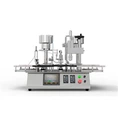
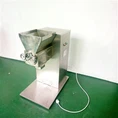
A paddle mixing machine is a versatile and widely used piece of equipment in various industries, including food processing, pharmaceuticals, chemicals, and agriculture. As a leading supplier of mixing machines, I'm often asked about how these machines work. In this blog post, I'll provide a detailed explanation of the working principles of a paddle mixing machine, its components, and its applications.
Basic Working Principles
At its core, a paddle mixing machine operates on the principle of mechanical agitation to blend different materials uniformly. The machine consists of a large, usually horizontal, mixing chamber where the materials are loaded. Inside the chamber, there are multiple paddles attached to a central shaft. When the machine is turned on, the central shaft rotates, causing the paddles to move through the materials.
The movement of the paddles creates a complex flow pattern within the mixing chamber. The paddles push and pull the materials in different directions, breaking up clumps and ensuring that all particles are thoroughly mixed. This process is known as convective mixing, where large volumes of material are moved around the chamber.
In addition to convective mixing, paddle mixers also promote shear mixing. Shear forces are generated when the paddles move through the material at different speeds or in different directions. These shear forces help to break down individual particles and distribute them more evenly throughout the mixture.
Components of a Paddle Mixing Machine
- Mixing Chamber: The mixing chamber is the main body of the machine where the actual mixing takes place. It is typically made of stainless steel or other durable materials to withstand the wear and tear of the mixing process. The shape and size of the mixing chamber can vary depending on the specific application and the volume of material to be mixed.
- Central Shaft: The central shaft is the heart of the paddle mixing machine. It is driven by a motor and rotates at a specific speed. The paddles are attached to the central shaft, and their movement is directly controlled by the rotation of the shaft.
- Paddles: The paddles are the key components that perform the mixing action. They come in various shapes and sizes, depending on the type of material being mixed and the desired mixing effect. Some common paddle shapes include straight paddles, curved paddles, and angled paddles. The design of the paddles is crucial for achieving efficient and uniform mixing.
- Motor: The motor provides the power to drive the central shaft. It is selected based on the size and capacity of the mixing machine, as well as the required mixing speed. Electric motors are the most commonly used type of motor in paddle mixing machines, but hydraulic or pneumatic motors can also be used in certain applications.
- Control Panel: The control panel allows the operator to control the operation of the mixing machine. It typically includes buttons or switches for starting and stopping the machine, adjusting the mixing speed, and setting the mixing time. Some advanced control panels may also feature digital displays and programmable settings for more precise control.
Types of Paddle Mixing Machines
- Single-Shaft Paddle Mixer: This is the most basic type of paddle mixing machine. It has a single central shaft with paddles attached to it. Single-shaft paddle mixers are suitable for mixing relatively small volumes of materials and are commonly used in laboratory settings or small-scale production.
- Double-Shaft Paddle Mixer: Double-shaft paddle mixers have two parallel central shafts with paddles on each shaft. The two shafts rotate in opposite directions, creating a more intense mixing action. Double-shaft paddle mixers are capable of mixing larger volumes of materials and are often used in industrial applications.
- Continuous Paddle Mixer: Continuous paddle mixers are designed to operate continuously, allowing for a continuous flow of materials through the mixing chamber. These mixers are commonly used in large-scale production processes where a constant supply of mixed materials is required.
Applications of Paddle Mixing Machines
- Food Processing: Paddle mixing machines are widely used in the food industry for mixing ingredients such as flour, sugar, spices, and additives. They can be used to make dough, batter, sauces, and other food products.
- Pharmaceuticals: In the pharmaceutical industry, paddle mixers are used to blend active pharmaceutical ingredients (APIs) with excipients to form tablets, capsules, and other dosage forms. The precise mixing capabilities of paddle mixers are essential for ensuring the uniformity and quality of pharmaceutical products.
- Chemicals: Paddle mixing machines are used in the chemical industry for mixing various chemicals, including powders, granules, and liquids. They can be used to produce paints, coatings, adhesives, and other chemical products.
- Agriculture: In the agricultural sector, paddle mixers are used to mix animal feed, fertilizers, and pesticides. They help to ensure that the nutrients and additives are evenly distributed throughout the feed or fertilizer, improving the quality and effectiveness of the products.
Advantages of Paddle Mixing Machines
- Uniform Mixing: Paddle mixing machines are capable of achieving a high degree of uniformity in the mixing process. The combination of convective and shear mixing ensures that all particles are thoroughly blended, resulting in a homogeneous mixture.
- Versatility: Paddle mixers can be used to mix a wide range of materials, including powders, granules, liquids, and pastes. They can also handle materials with different densities, viscosities, and particle sizes.
- Easy to Clean: Most paddle mixing machines are designed with easy-to-clean features. The mixing chamber and paddles can be easily accessed and cleaned, reducing the risk of cross-contamination between different batches of materials.
- Energy Efficiency: Paddle mixers are relatively energy-efficient compared to other types of mixing machines. They require less power to operate, resulting in lower energy costs.
How to Choose the Right Paddle Mixing Machine
When choosing a paddle mixing machine, there are several factors to consider:


- Capacity: Determine the volume of material that needs to be mixed per batch or per hour. Choose a mixing machine with a capacity that can meet your production requirements.
- Material Characteristics: Consider the properties of the materials to be mixed, such as particle size, density, viscosity, and moisture content. Different materials may require different paddle designs and mixing speeds.
- Mixing Time: The mixing time required to achieve a homogeneous mixture can vary depending on the type of material and the desired degree of mixing. Choose a mixing machine that can achieve the required mixing time within your production schedule.
- Cleaning and Maintenance: Look for a mixing machine that is easy to clean and maintain. This will help to ensure the longevity of the machine and prevent contamination between batches.
- Cost: Consider the initial cost of the mixing machine, as well as the operating and maintenance costs over its lifetime. Choose a machine that offers the best value for your money.
Related Equipment
In addition to paddle mixing machines, we also offer a range of related equipment, such as Pulverizer, Granulator Machine, and Pulverizer. These equipment can be used in conjunction with paddle mixers to form a complete production line, providing you with a comprehensive solution for your mixing and processing needs.
Conclusion
Paddle mixing machines are an essential piece of equipment in many industries. Their ability to achieve uniform mixing, versatility, and ease of use make them a popular choice for a wide range of applications. As a leading supplier of mixing machines, we are committed to providing our customers with high-quality products and excellent customer service. If you are interested in purchasing a paddle mixing machine or have any questions about our products, please feel free to contact us. We look forward to working with you to meet your mixing needs.
References
- Perry, R. H., & Green, D. W. (Eds.). (2008). Perry's Chemical Engineers' Handbook (8th ed.). McGraw-Hill.
- Baker, C. G. J. (2012). Mixing in the Process Industries (3rd ed.). Butterworth-Heinemann.
- McCarthy, K. F. (2005). Mixing and Blending Technology. Wiley-Interscience.