


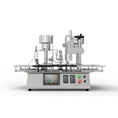
Hey there! As a supplier of China vial fillers, I often get asked a bunch of questions about what our machines can and can't do. One question that pops up quite a bit is, "Can China vial filler be used for lubricant vials?" Well, let's dig into this topic and find out.
First off, let's talk a bit about vial fillers. A Vial Filler is a machine designed to fill vials with various substances accurately and efficiently. These machines come in different types, like volumetric fillers, piston fillers, and peristaltic fillers, each with its own unique way of getting the job done.
Now, when it comes to lubricants, they have some specific characteristics. Lubricants are usually viscous substances, which means they're thicker and flow more slowly compared to water or other thin liquids. They can also have different chemical compositions, and some might be corrosive or reactive to certain materials.
So, can our China vial fillers handle lubricants? The answer is, in many cases, yes! But it depends on a few factors.
Compatibility of Materials
One of the most important things is the compatibility of the machine's parts with the lubricant. Lubricants can be harsh on certain materials. For example, some lubricants might react with plastic parts, causing them to degrade over time. That's why our vial fillers are often made with high - quality stainless steel or other resistant materials. Stainless steel is a great choice because it's resistant to corrosion and can withstand the chemical properties of many lubricants. This ensures that the machine not only works well but also has a long lifespan.
Viscosity Handling
As I mentioned earlier, lubricants are viscous. A good vial filler needs to be able to handle this viscosity. Our piston fillers, for instance, are excellent at dealing with thick liquids. They work by using a piston to draw in and dispense the lubricant. The piston can be adjusted to control the amount of lubricant being filled, which is crucial for accurate dosing. The design of the piston and the pump system in our vial fillers allows them to push the thick lubricant through the filling nozzles smoothly, without any clogging or uneven filling.
Filling Accuracy
When filling lubricant vials, accuracy is key. You don't want to over - fill or under - fill the vials. Our vial fillers are equipped with advanced control systems that ensure precise filling. These systems can be programmed to fill a specific volume of lubricant into each vial, and they can maintain a high level of accuracy even when filling large batches of vials. This is important because it helps to avoid waste and ensures that each vial meets the required standards.
Hygiene and Cleanliness
Lubricants can be messy, and it's important to keep the filling process clean. Our vial fillers are designed with easy - to - clean parts. They can be disassembled quickly for cleaning and sanitizing, which helps to prevent cross - contamination between different batches of lubricants. This is especially important if you're filling different types of lubricants with different properties.


Integration with Other Equipment
In a production line, the vial filler doesn't work alone. It often needs to be integrated with other equipment, like a Vial Capping Machine or a Capping Machine. Our vial fillers are designed to be easily integrated with these other machines. This means that once the vials are filled with lubricant, they can be quickly and efficiently capped, which speeds up the overall production process.
Customization
We understand that every customer's needs are different. That's why we offer customization options for our vial fillers. If you have a specific type of lubricant with unique properties, or if you have special requirements for the filling process, we can modify the machine accordingly. For example, we can change the size of the filling nozzles, adjust the piston speed, or add additional features to meet your exact needs.
Advantages of Using Our China Vial Fillers for Lubricants
- Cost - Effective: Our vial fillers are priced competitively, which means you can get a high - quality machine without breaking the bank. This is especially important for small and medium - sized businesses that need to keep their production costs down.
- Reliability: We've been in the business for a long time, and our vial fillers are known for their reliability. You can count on our machines to work consistently, day in and day out, without frequent breakdowns. This ensures that your production line runs smoothly and you can meet your production targets.
- Technical Support: We offer excellent technical support to our customers. If you have any questions or problems with the vial filler, our team of experts is always ready to help. We can provide troubleshooting advice, offer training on how to operate the machine, and even help with maintenance and repairs.
Considerations Before Buying
Before you decide to use our vial filler for lubricant vials, there are a few things you should consider. First, you need to test the lubricant with the machine. We can provide samples of our vial fillers for you to test with your specific lubricant. This will help you to see if the machine can handle the lubricant properly and if it meets your filling requirements.
Second, think about the production volume. If you have a high - volume production line, you might need a more advanced and high - speed vial filler. Our sales team can help you choose the right model based on your production needs.
In conclusion, our China vial fillers can definitely be used for lubricant vials in many cases. With their compatibility with lubricants, ability to handle viscosity, filling accuracy, and easy integration with other equipment, they are a great choice for businesses looking to fill lubricant vials.
If you're interested in learning more about our vial fillers or want to discuss your specific requirements for filling lubricant vials, don't hesitate to get in touch. We're here to help you find the best solution for your production needs.
References
- "Liquid Filling Technology: Principles and Applications" - A comprehensive book on liquid filling machines and their capabilities.
- Industry reports on vial filling and packaging for viscous substances.