


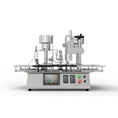
Can an ampoule sealer be used in a laboratory? That's a question I get asked a lot as an ampoule sealer supplier. And the answer is a resounding yes! In this blog, I'll dive into why ampoule sealers are not only useful but essential in a laboratory setting.
First off, let's talk about what an ampoule sealer is. An Ampoule Sealer is a device used to seal ampoules, which are small, hermetically sealed vials made of glass or plastic. These ampoules are commonly used to store small quantities of liquid or powder substances, especially those that are sensitive to air, light, or moisture.
In a laboratory, the need for proper storage and preservation of samples is crucial. Many experiments and research projects rely on the integrity of the samples, and any contamination or degradation can lead to inaccurate results. That's where ampoule sealers come in handy. By creating an airtight seal, they prevent the entry of oxygen, moisture, and other contaminants, ensuring the stability and longevity of the samples.
One of the main advantages of using an ampoule sealer in a laboratory is its ability to provide a high level of protection. Glass ampoules, in particular, offer excellent chemical resistance and can withstand a wide range of temperatures and pressures. This makes them suitable for storing a variety of substances, including volatile chemicals, biological samples, and pharmaceutical products.
Another benefit is the precision and consistency of the sealing process. Ampoule sealers are designed to create a uniform seal around the neck of the ampoule, ensuring a tight and reliable closure. This is important for maintaining the sterility of the contents and preventing leakage. With a good ampoule sealer, you can be confident that your samples will remain intact and uncontaminated.
In addition to protection and precision, ampoule sealers also offer convenience and efficiency. They are relatively easy to operate and can seal multiple ampoules in a short amount of time. This is especially useful in a busy laboratory where time is of the essence. Some ampoule sealers even come with automated features, such as adjustable sealing times and temperature controls, which further enhance the efficiency of the sealing process.
Now, let's take a look at some specific applications of ampoule sealers in a laboratory. One common use is in the storage of pharmaceutical products. Many medications, especially those in liquid form, need to be stored in airtight containers to maintain their potency and stability. Ampoules sealed with an ampoule sealer provide an ideal solution for this purpose. They can be easily labeled and stored in a refrigerator or freezer, ensuring the long-term viability of the medications.
Another application is in the preservation of biological samples. In the field of biotechnology and microbiology, researchers often need to store cells, tissues, and other biological materials for future use. Ampoules sealed with an ampoule sealer can help protect these samples from contamination and degradation, allowing them to be stored for extended periods of time without losing their viability.
Ampoule sealers are also used in the production of vaccines and other injectable medications. The sealing process ensures the sterility of the product and prevents the entry of bacteria and other pathogens. This is critical for ensuring the safety and effectiveness of the medications.
In addition to these applications, ampoule sealers can also be used in other areas of the laboratory, such as in the preparation of standard solutions, the storage of reagents, and the packaging of small quantities of chemicals. The versatility of ampoule sealers makes them a valuable tool for any laboratory.
When choosing an ampoule sealer for your laboratory, there are several factors to consider. One of the most important factors is the type of ampoules you will be using. Different ampoules have different sizes and shapes, and you need to choose a sealer that is compatible with the ampoules you have.
Another factor to consider is the sealing method. There are several types of sealing methods available, including flame sealing, induction sealing, and mechanical sealing. Each method has its own advantages and disadvantages, and you need to choose the method that is most suitable for your application.
You also need to consider the capacity and speed of the sealer. If you have a large volume of ampoules to seal, you may need a sealer with a high capacity and fast sealing speed. On the other hand, if you only need to seal a small number of ampoules, a smaller and more portable sealer may be sufficient.
Finally, you need to consider the cost and reliability of the sealer. Ampoule sealers can vary in price depending on their features and capabilities. You need to choose a sealer that fits your budget and offers good value for money. At the same time, you also need to choose a sealer that is reliable and easy to maintain.
As an ampoule sealer supplier, I understand the importance of providing high-quality products and excellent customer service. That's why I offer a wide range of ampoule sealers to meet the needs of different laboratories. Whether you need a small, portable sealer for occasional use or a large, industrial-grade sealer for high-volume production, I have the right solution for you.
In addition to ampoule sealers, I also offer Ampoule Filler and other related products. These products are designed to work together to provide a complete solution for ampoule filling and sealing. By using my products, you can ensure the efficiency and accuracy of your ampoule filling and sealing process.
If you're interested in learning more about ampoule sealers or other products I offer, please don't hesitate to contact me. I'm always happy to answer your questions and provide you with more information. Whether you're a small research laboratory or a large pharmaceutical company, I can help you find the right solution for your needs.
In conclusion, an ampoule sealer is a valuable tool for any laboratory. It provides a high level of protection, precision, and convenience, making it ideal for storing and preserving a variety of substances. If you're looking for a reliable and efficient way to seal ampoules in your laboratory, I encourage you to consider using an ampoule sealer. And if you need any help or advice, please don't hesitate to contact me. I'm here to help you make the right choice for your laboratory.
References


- General knowledge in laboratory equipment and applications.
- Industry standards and best practices for ampoule filling and sealing.