


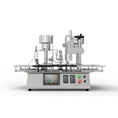
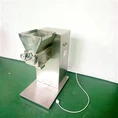
Hey there! If you're in the market for mixing equipment, you're in the right place. I'm a supplier of mixing equipment, and I'm here to tell you all about the automatic mixing equipment options out there.
First off, let's talk about why automatic mixing equipment is so great. Manual mixing can be a real pain in the neck. It's time - consuming, and it's hard to get a consistent mix every single time. With automatic mixing equipment, you can save a ton of time and get a more uniform result.
There are several types of automatic mixing equipment that we offer, and each has its own unique features and uses.
1. High - Shear Mixers
High - shear mixers are amazing pieces of kit. They use a combination of high - speed rotation and sharp blades or rotors to break down and mix substances. These mixers are perfect for applications where you need to emulsify, disperse, or homogenize materials. For example, in the food industry, they can be used to make smooth peanut butter or mayonnaise. In the pharmaceutical industry, they're great for creating uniform drug formulations.
The advantage of high - shear mixers is that they can achieve very fine particle sizes and excellent mixing in a relatively short time. They're also quite versatile and can handle a wide range of viscosities.
2. Planetary Mixers
Planetary mixers are another popular option. The mixing tool in a planetary mixer rotates on its own axis while also orbiting around the mixing bowl. This dual - motion design ensures that every part of the mixture gets thoroughly mixed.
They're often used in bakeries for mixing dough, but they're also useful in the cosmetics industry for blending creams and lotions. Planetary mixers come in different sizes, from small countertop models for home use to large industrial - scale machines.
3. Ribbon Blenders
Ribbon blenders are ideal for dry powder mixing. They have a long, horizontal trough with a helical ribbon agitator inside. As the agitator rotates, it moves the powder materials back and forth, creating a thorough mix.
These blenders are commonly used in the chemical, agricultural, and feed industries. They can handle large volumes of material and are relatively easy to clean.
4. Paddle Mixers
Paddle mixers work by using large paddles to stir and mix materials. They're suitable for mixing viscous liquids and semi - solids. In the paint industry, paddle mixers can be used to blend pigments and resins.
The paddles can be designed in different shapes and configurations to suit specific mixing requirements. Some paddle mixers also have variable speed controls, allowing you to adjust the mixing intensity.
Now, if you're involved in the pharmaceutical industry, you might also be interested in some related equipment. We offer Granulators which are used to turn powders into granules. Granulation is an important step in pharmaceutical manufacturing as it can improve the flowability and compressibility of powders.


Another useful piece of equipment is the Pulverizer. It's used to break down large particles into smaller ones, which can be crucial for getting a more uniform mix in the subsequent processes. And if you're looking for a more comprehensive granulation solution, our Granulator Machine might be just what you need.
When choosing automatic mixing equipment, there are a few things you should consider. First, think about the type of materials you'll be mixing. Different materials have different viscosities, densities, and chemical properties, and you need a mixer that can handle them properly.
Second, consider the volume of material you'll be working with. If you're a small - scale producer, a compact mixer might be sufficient. But if you're a large - scale manufacturer, you'll need an industrial - grade machine with high - capacity.
Third, think about the level of automation you need. Some mixers can be fully automated, with features like programmable controls and sensors for monitoring the mixing process. Others might require more manual intervention.
Finally, don't forget about maintenance and cleaning. A mixer that's easy to clean and maintain will save you a lot of hassle in the long run.
So, there you have it - a rundown of some of the automatic mixing equipment options available. Whether you're in the food, pharmaceutical, chemical, or any other industry that requires mixing, there's a solution out there for you.
If you're interested in learning more about our mixing equipment or have any questions about which type of mixer would be best for your specific needs, don't hesitate to reach out. We're here to help you find the perfect mixing solution for your business. Let's start a conversation about your requirements and see how we can work together to improve your mixing processes.
References
- Perry, R. H., & Green, D. W. (Eds.). (1997). Perry's Chemical Engineers' Handbook. McGraw - Hill.
- Goodwin, J. W., & Hughes, R. W. (2000). Rheology for Chemists: An Introduction. Royal Society of Chemistry.